

Are Your Photos Really Safe? The Risks You See, and the Ones You Don’t
You have been meaning to deal with the photos for years. Really, you have.
Maybe it started as a someday project and quietly became a source of guilt. The boxes in the closet. The drives in the drawer. The thousands of images on your phone that you love and never look at.
You know it matters. You have known for a long time. And still, life keeps handing you reasons to put it off.
So before another year passes, it is worth understanding what you are actually risking by waiting. Some of it you have already imagined. Some of it almost no one thinks about until it is too late.
The risks you can already picture
You know these risks, and you may have taken a step or two against them.
Fire and flooding can take generations of prints in an afternoon. A break-in carries off the irreplaceable in the same boxes and laptops as everything else. Hard drives fail without warning, usually right when you had assumed they were fine. And plenty of collections are simply misplaced in a move, or set on the curb during a cleanout because no one knew what was in the box.
Real risks, every one.
But they are not what quietly undoes a family’s photos in most cases. These next ones are, and almost no one sees them coming.
The risks you have probably never considered
Format death
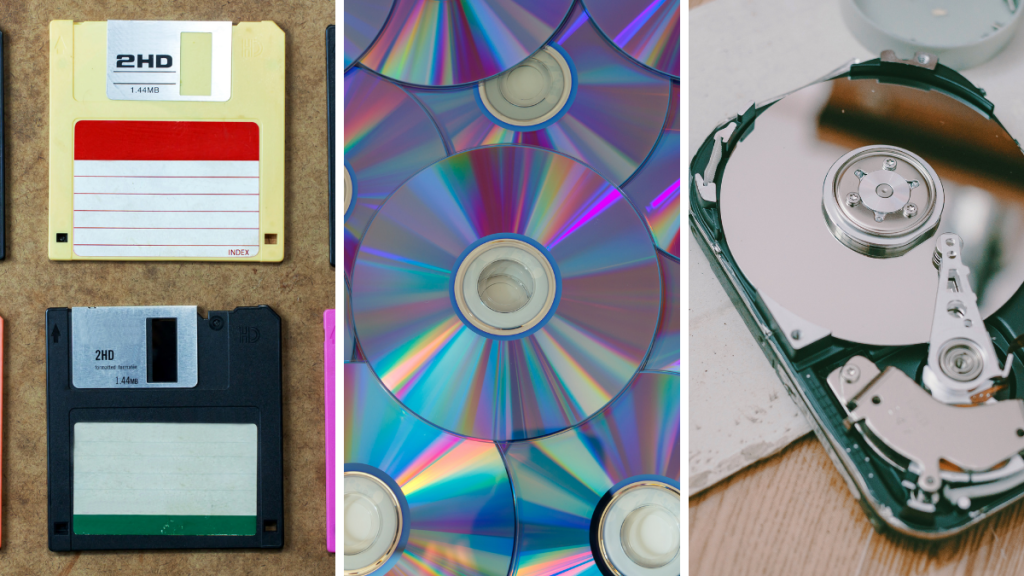
Your photos and videos can survive perfectly and still become impossible to see. The VHS tape holding your daughter’s first steps is fine, but the player that reads it is gone. The carousel of slides from your parents’ anniversary is intact, and yet no one has looked at them in thirty years. Even digital files age out.
File types that were standard a decade ago can already be difficult to open. When the format dies, the memory is still there. You just cannot reach it anymore.
Inaccessibility
More and more of your family’s photos now live behind a login. Your phone, a cloud account, a social media profile. When those are protected by a password only you know, that protection becomes a wall the moment you are not there to open it. We have sat with families who could see the thumbnails of a lifetime and could not get in. The photos existed. The way in did not.
The unknowns
A photo no one can identify is only half a memory. Right now, you are very likely the person who remembers. You know that it was the summer at the lake, that the woman in the blue dress is your great aunt, that the baby is you. Once those details live only in your head, an unlabeled photo becomes a beautiful mystery for your children instead of a piece of their history they can actually hold onto.
No backup at all
Most collections we meet have exactly one copy. One drive. One phone. One album. A single point of failure for something you can never recreate.
It is the risk that quietly sits underneath all the others, because every danger on this page becomes final the moment there is nowhere else the photo lives.
Why the quiet risks are the dangerous ones
The loud risks get attention precisely because they are loud. You feel the fear, so you act on it.
The quiet risks do the opposite. Nothing seems wrong. The tapes are on the shelf. The drive is in the drawer. The account is right there on your phone. Everything looks safe, and so the years pass. The formats keep aging. The names and the stories live in fewer and fewer memories. There is no alarm. That is exactly what makes these risks dangerous.
And here is the part I most want you to hear.
If your photos are scattered across formats and drives and accounts, you are not behind, and you are not careless. You are a person who has been busy leading a full life. This is simply what decades of one look like. Feeling overwhelmed by the pile is not a personal failing. It is the honest reaction to a genuinely big project.

The bottom line
Protecting your family photos is not really about guarding against one disaster. It is about making sure your memories can still be seen, opened, understood, and passed on, long after the tape player and the password and the one drive are gone. The obvious risks ask for a fireproof box. The quiet ones ask for a plan. Your memories matter too much to leave to a single copy and the hope that nothing goes wrong.
You do not have to figure this out alone
As a Certified Professional Photo Organizer, I can help you see exactly which of these risks your collection is exposed to, and what to do about them first. No judgment about how long it has waited. Just a clear, calm look at what you have and where the gaps are.
If you are finally ready to move this off your someday list, let’s talk. One conversation is all it takes to know where you stand.

About the Author
Andi Willis started Good Life Photo Solutions after searching for photos of her late father and realizing how easily a family’s memories can slip away. Now a Certified Professional Photo Organizer with more than 15 years of experience, she helps families across the country bring order to overwhelming photo chaos and preserve the stories that matter most. She works from Smithfield, Virginia.
If your own photos feel like too much to face alone, that is exactly the kind of puzzle we solve.
More Photo Organizing Tips


Affiliate Disclaimer:
This post may contain affiliate links. If you make a purchase through one of these links, Good Life Photo Solutions LLC may earn a small commission at no extra cost to you. Your support helps sustain our small business, and we truly appreciate it! For more details, please read our disclosure policy.
Pin Me!